PulseMotion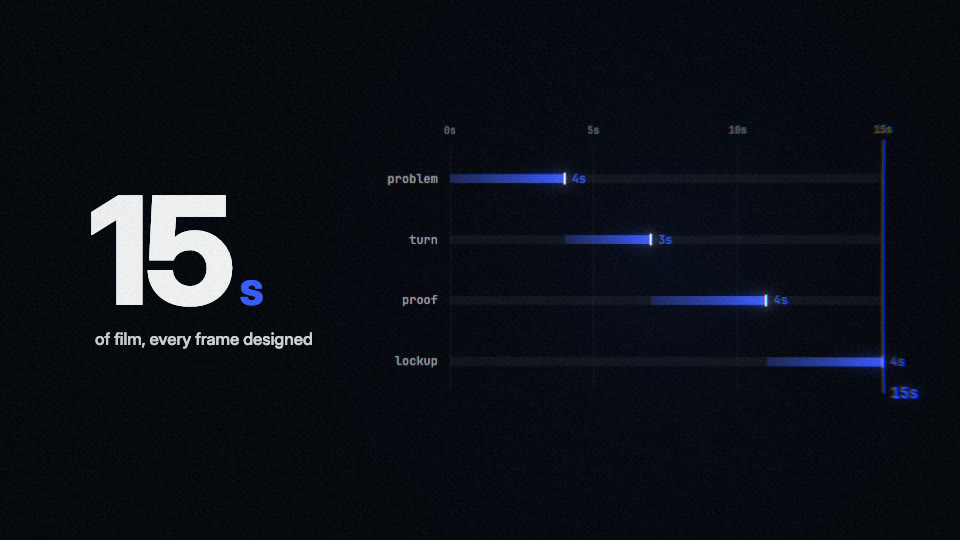
A website is a useful source for a brand film. It is also a collection of competing messages: product details, hiring copy, legal qualifiers, old announcements and navigation labels. A good brief tells the director which part matters now.
Before turning a website into video, prepare a small, reviewable packet. The goal is to make the intended story and its evidence easy to find, without asking someone to guess which claims are current.
Start with the person and the placement
Name the viewer, the situation and the next step. “Founders comparing ways to introduce a new product” is more useful than “everyone interested in business.” A homepage film, a sales-deck opener and a social post may need different endings even when they share the same brand assets.
Record the intended language, duration, aspect ratio and likely sound setting. Do not rely on spoken copy to carry a fact if the film must work with the sound off. If the destination is not decided, mark it as an open decision rather than adding several calls to action.
Choose one message and trace its sources
Provide the main website URL and the specific pages that support the story. For each candidate claim, copy the source wording into the brief, preserve the page address and record when it was checked. For an internal document, use an approved extract the creative team is allowed to see.
| Item | What to include | What to resolve before production |
|---|---|---|
| Main claim | One sentence about a concrete benefit or mechanism | Is it true of the product available today? |
| Evidence | Original quote, URL or approved source, date checked | What limits or conditions belong with it? |
| A number | Value, unit, time period and method | Is it a target, a measurement or a customer result? |
| Customer material | Approved wording and permitted uses | May the name, logo and result appear publicly? |
If the homepage and a product page disagree, ask the owner which statement is current. Do not quietly combine the strongest parts of both into a new claim. Material behind a login should come from an authorized export; a password is not a creative asset.
Bring the brand assets, not just a screenshot
Supply the original logo, the permitted colour values and the typeface guidance. Include a light-background and dark-background logo if the brand has both. If the logo must keep a clear space or a minimum size, say so.
A useful asset folder also contains:
- A few approved product images or screen recordings, with sensitive information removed.
- Examples of the brand’s preferred visual tone and a short explanation of what to borrow from them.
- Any required legal line or language-specific wording.
- Usage permission for imagery, music and customer material.
References work best when they name a quality: a quiet pace, large type, restrained colour, or a particular kind of transition. Asking for another brand’s exact film makes it harder to find your own story.
Separate facts from creative freedom
Mark what cannot change: the claim, logo proportions, product names, qualifications and the meaning of a number. Then mark what the director may explore: composition, camera motion, scene order, pacing and transitions.
That distinction is useful when reviewing the first version. You can reject an inaccurate claim without prescribing every visual decision. You can also recognize a strong new idea even when it looks different from the reference.
Our Kumo-cha production notes show how a single fact from a fictional brief led to a recurring circular form. The film’s structure grew from the source material.
Use this one-page handoff
Copy the following into your project brief and leave unknowns explicitly unresolved:
Audience and viewing situation:
Where the film will appear:
One thought the viewer should remember:
Evidence and source for that thought:
Website pages checked, and date:
Approved logo, colours, type and images:
Language / duration / aspect ratio / sound:
One next step and its destination:
Statements or assets still awaiting approval:
Person who can confirm facts and approve the film:
Read it back before generating or animating anything. If there is no clear thought or no evidence for it, that is the next piece of work. A more elaborate animation cannot answer those questions for you.
With the packet ready, turn it into a 15-second script. To see the current product experience, explore the live demos or join the early-access list. PulseMotion’s public site currently offers interactive demos and registration; website-to-film generation is not yet open to the public.